
The Framing Effect - It’s a big deal
I started this story with the intention of using “framing” as an example of being stuck within certain boundaries, like a watercolour landscape in a frame, but when I started researching the subject I discovered a rabbit hole of useful information that didn’t exactly fit my idea of being trapped inside framed boundaries.

It turns out that “framing” is something we are subjected to on a daily basis. The media uses it, politicians use it, grocery stores use it. We are constantly being manipulated by the information we’re fed, and this powerful tool has a name. In psychology, it’s called “the framing effect”.
The framing effect is how information is presented to us. Imagine your friend complaining about her partner and how terrible her relationship has become. You’re going to support her but she’s only telling you one side of the story. She is unintentionally “framing” her relationship in a way that makes her look good. She’s not purposely trying to manipulate you, but the way she is framing her situation draws on your empathy, she’s your friend, you’re going to feel sorry for her.
Feeling one way or another
When it comes to making money or gaining power, however, the rules are very different. These people intentionally use the framing effect to influence us on things like our spending habits and how we vote. Framing is very effective in swaying us one way or another and that’s why they play on our “bias tendencies” and emotions to make us feel one way or another about something or someone.
What are bias tendencies? According to Psychology Today, “Generally, they are the things that determine whether we consider something good or bad.” 1
Let’s say you got food poisoning at a local burger restaurant and refuse to eat there again. You now have a negative bias toward that restaurant because they had bad food. But after stuffing yourself at your friend’s BBQ, you realise you didn’t eat any of her delicious hamburgers. You didn’t know that you developed a negative bias to all burgers and subconsciously avoided them. And that unconscious bias is where they get us because we’re easier to influence when we don’t know it’s happening.
Here's a fun fact. The brain is hit with about 11 million bits of information per second, but it can only process about 40 bits of info per second.2 It creates shortcuts, so it doesn’t overload, and those shortcuts include preferences and perceptions that make processing all that information easier. It sounds so complicated, but when you see our examples, you’ll see why it’s important to recognise the signs of the framing effect.
Here we provide some examples how the framing effect is intentionally used to influence our shopping decisions, how we feel about our neighbours, our political views, and more. We encourage you to consider implementing some of our suggested tools to help you recognise the framing effect and enable you to make more balanced and informed decisions in the future. Let’s start small.

Framed to your shopping bias
You are looking at chocolate bars in the grocery store and see two packages of yummy dark chocolate. One bar reads “10% sugar” and one bar read “90% sugar free”. Most people are going to pick up the 90% sugar free package although both candy bars have 10% sugar content.
This would be a bias, or preference to have a healthier option. Something 90% is better than just 10%, right?

Framed to your fear bias
The news is telling it’s audience about a murder. One network says, “A 30-year-old dark-skinned man from Jonesville, a suburb of Hitsville known for its high crime rate, was arrested for the stabbing murder of 71-year-old Mary.” Another network reports, “A 30-year-old man was arrested for murder on Saturday in the Jonesville area. Seventy-one-year-old Mary Smith was found dead in her apartment by a neighbour. The coroner estimates she was killed about 72 hours ago.”
In this case, one network is giving you information that could influence your view of the alleged murderer, while the other is giving you facts without descriptions that could be used to sway you one way or another. One network is trying to influence your thinking about this event, and the other just wants you to know what happened.
Did it work? Were you influenced by how the first network framed the situation? Most people would be influenced because we all have fears. Sometimes we don’t want to see our unconscious bias.
Framed to your perception of beauty
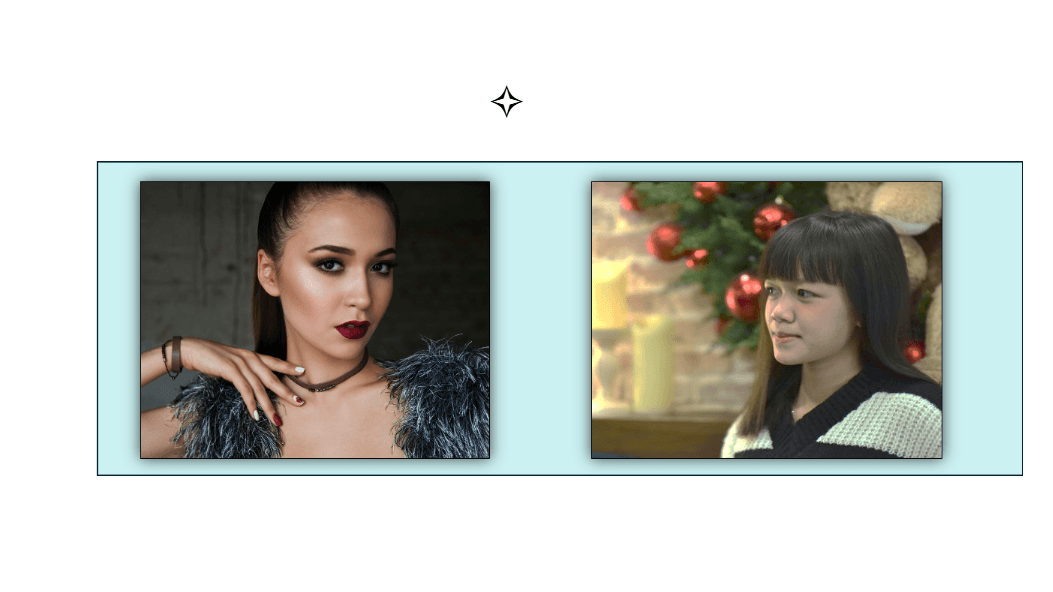
The Crone Network believes every woman is beautiful, but we humans have an unconscious preference for nice looking people. It’s as though a preference for beauty over average is wired into our DNA, implying that attractive people are more likely to sustain our species than less attractive people. This is just a theory, but it’s clear the advertisers present more beautiful people than they do average Crones like me.
Using the framing effect with great success, the fashion and beauty industry feed off our natural desire to feel attractive. But most of us will never be able to attain the level of professionally presented beauty they show us.
Wanting to look beautiful isn’t a bad thing, but if we’re comparing ourselves to younger women who are perfectly coiffed and painted, cast in the perfect light and shot by a pro photographer, we’re damaging ourselves by thinking we’re not enough. I mean, even the actors for toilet bowl cleaners are beautiful people!
How do these framing effects work on you? Do you feel the need to measure up? Do you see the beauty in less attractive people? Can you see how we’re being set up to spend money?

Framed to your sense of fairness or “splitting the difference”
I was the boss lady at a floral supply company for decades, and when it came time for an annual bonus, I had a particular figure in mind that was fair to me and the business. The owner’s first offer was insulting considering how successful the company was under my leadership, so I countered with a high number. We settled in the middle. He didn’t pay as much as I wanted, and I got more than I would have settled for. We “split the difference” and we were both satisfied.
Have you ever bargained for something? Offered a lower price in hopes of paying less? How did you frame your argument for the discount? What are you willing to pay?
How we perceive information will contribute to how we make decisions. If you perceive that hamburgers are going to make you sick, your negative bias will change the way you shop. And our bias, preference, and perception are not always based on accurate information. Surely there are yummy hamburgers that don’t give you food poisoning.
“Perception is more important than reality. If someone perceives something to be true, it is more important than if it is in fact true.” Ivanka Trump
The framing effect is very common and when it’s working properly, we may not recognise the ways power peddlers and money-makers are moving us to buy this or believe that. When it’s working, our decisions may not always be based on fact, logic, or even common sense.
It’s important to first recognise and then consider the intention behind the messages we’re receiving. For instance, if you’re watching a cereal commercial on TV, what do you think the company’s goal is? Why did they make this commercial? What are they getting out of it? Chances are the answer is money and not your health.
The framing effect can boggle the mind but knowing that it’s being used to influence our decision making is the first step, whether you’re voting for your next leader or deciding which triangle cheese to buy.
How to deal with the framing effect
Knowledge is power. The overseers don’t want you to know they’re using this controlling psychological device to move you. But now that you do know, you’ll probably start noticing the nuances used to seep into our unconscious minds and influence our decision making.
Because the framing effect is so successful in how it presents information, let’s look at some ways we can use to make decisions that are best for us and not what’s best for them.

Be aware and alert
Knowing about the framing effect can help us make more rational and informed decisions. How the information is being shown is just as important as the information we’re being shown.
Here’s an example. You’re at the grocery store and there are two sizes of your favourite “triangle” cheese. One is cheaper than the other. The sellers of this cheese are using the framing effect to appeal to our sense of a bargain. We’re naturally drawn to a lower price, so we put the pack of 6 wedges in our shopping trolley.
But when we’re paying attention, when we’re aware of the framing effect, we see that see the more expensive option is a better value. (6 wedges cost £0.83 each and 9 wedges cost £0.69 each). You’re getting more for your money with the larger pack.

Use critical thinking
Don’t just accept what you’re being presented, question it. Think about the message, analyse it, break it down and look at all sides. Ask yourself, “What are they Not saying?”
Let’s say a politician is giving a speech and claims, “Under the previous leader, we had the worst economy in 40 years. People couldn’t get work and food prices nearly doubled under their leadership.”
Let’s think about that statement. Is it true? You fact checked and discovered it is true, but they’re not telling you the whole story. They’re not telling you that an economy is lots more than just food and jobs. During the Covid pandemic, for example, people couldn’t Go to work, food prices went up, and we were all scrambling for toilet paper. From the politicians point of view, it’s best Not to remind us of those facts because it works against them.
Ask yourself, “Does this make sense?” What’s their motivation for telling me this? Question everything. Think with a critical mind because what you’re seeing or hearing may not be in Your best interest.

Positive and negative frames
We’ve all been told to “make a list of positives and negatives” to help us make important decisions, and that’s how we can approach the framing effect. Look at the message and it’s opposing view. Making side by side comparisons will give us more clarity.
Imagine that I need surgery, and my doctor tells me there’s a 90% success rate. A high success rate is good and makes me more comfortable about having the procedure. But looking at the negative frame means that 10% of the people having this surgery don’t survive which doesn’t make me feel good at all. Can you see how the doctor framed the positive instead of the negative?
Another way to think about this type of framing is buying a used car. While you’re looking, you see the cars are sparkling clean, even the engines are shiny. You’re seeing the beauty of the car, not how well the car runs. The salesperson isn’t going to volunteer that the heater has been serviced 4 times in 2 years because that casts a negative vibe or bias against that car. With a positive frame, such as pretty cars, you’re more likely to buy a vehicle. The car dealer isn’t going to say, “you might have trouble with the heater.”

Talk it out
Having a conversation with someone you trust is a great way to look at things from a different perspective. The more views you have of a situation, the more informed and powerful you become, and sharing can break the spell of the framing effect.
Maybe I’m a couple years away from retirement and some of my friends talk about retirement being boring and how they miss having structure and something to do. The way they have framed their negative experience would cause me to reconsider my own retirement strategies. Should I be worried?
But then I talk to my cousin, who’s the happiest person I know, and she tells me, “It took a while to get used to” but goes on to say how much she loves retirement. She created her own structure, one that she enjoyed and wasn’t forced to follow. She set her alarm to get up early, goes for a 10-minute walk in the morning, has time to read and take baths and naps and visit friends. Her experience is positively framed which is encouraging and gives me hope.
Can you see how talking it out can help give you clarity and different points of view? You may not change your mind, but at least you’ll have considered more options which empowers you to make decisions that work best for you and those you love.
Learning about the framing effect has given me more power and control over how I process the information being fed to me. It can be sinister when intentionally used by powerful people. It can sway our shopping habits like spending more for triangle cheese. And it can be innocently used by a friend telling us about their problems.
But being aware that the framing effect is being used to influence our thoughts and decisions is the key to breaking the psychological spell.
Copyright © 2025 The Crone Network. All rights reserved.
Additional reading
https://helpfulprofessor.com/framing-effect-examples/
1 https://www.psychologytoday.com/us/basics/bias
2 https://www.simplypsychology.org/cognitive-bias.html