Unseen
For years I’ve been hearing older women talk about feeling invisible in society today. At first, I excused this feeling as something that applied to other older women, but the more I investigated the phenomena the more I discovered how wrong I was to think in such narrow terms.
A 2023 UK research survey of 158 women over the age of 50, found that they recognised different types of feeling socially invisible. “Their perceived invisibility took five forms: (a) being under-seen/mis-seen in the media; (b) being mis-seen as objects of sexual undesirability; (c) being “ignored” in consumer, social, and public spaces; (d) being “grandmotherized,” that is, seen only through the lens of (often incorrectly) presumed grandmotherhood; (e) being patronized and erroneously assumed to be incompetent.”1
Let’s break this survey down so we have a better understanding of how some women feel about invisibility.
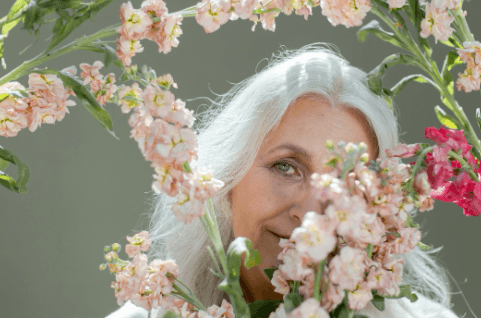
Where the hell are we?
- Survey point A
In my work, I need photos of older women for The Crone Network, but it’s hard to find real women and not perfectly styled senior models. Not only that, but most of the available images are of white women and our goal is to feature all women in their glorious sizes, shapes, and colours.
In TV and film, there are loads of older men cast in major roles, but where are the older women? And how many runway models are women over the age of 50?
Not having media representation contributes to the underfunding of projects that benefit older women. If our “market” isn’t seen, we’re not getting the attention we need and deserve.
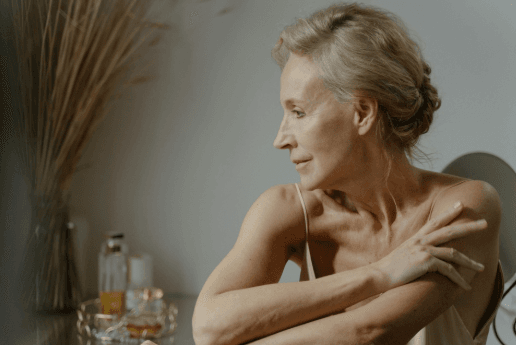
Feeling sexually undesirable
- Survey point B
After menopause, lots of women lose their interest in sex. The thought of having sex is more of a turn-off than a turn-on, and we often feel less attractive because our bodies have changed. I used to have full, perky breasts, but now I’ve just got the bags they came in, and I’m ok with that. Everything wilts sooner or later.
Some older women report hearing negative remarks when out with friends. Comments like, “Who’d want to shag that old slapper?”, or “She’s desperate so I’ll give her a quickie” can be incredibly hurtful to a woman and lead to crippling social isolation.
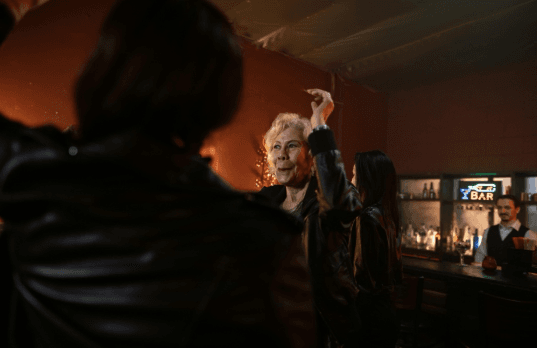
Being socially ignored
Survey point C
Invisible Women Syndrome is not a recognised condition, but it is described as a phenomenon by which older women are often dismissed and devalued. With society’s emphasis on youth and beauty, older women can be overlooked, like not getting served at a busy pub. It feels like, if we’re no longer fertile or beautiful, we’re just discarded like an old sweater that sits in the back of the closet - you love it, but it’s too beat up to wear anymore.
Telling a woman that she “looks good for her age” implies that there’s something wrong with being her age. One woman reported waiting for a train and being shoved aside by a young person who said, “You people shouldn’t be here this time of morning, people need to get to work.” They want to push us out of the way and ignore us.
We’re all just grandmothers
- Survey point D
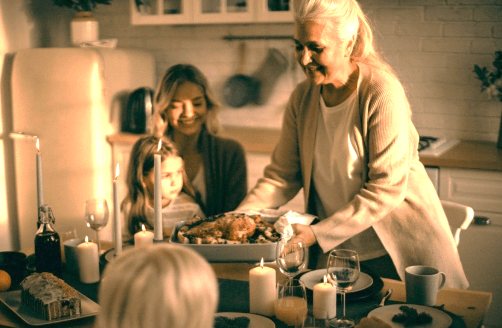
Older women are often stereotyped as grannies who are eager to watch the kids. There is often an expectation that we’ll be there for our family, whether in a care giving role or as a babysitter. And if you say no thanks, you’re cast as a mean old hag or told that you’re being selfish in your old age.
People ask questions like, “how many grandchildren do you have?” which implies that our only purpose in life was to procreate. We are told we shouldn’t wear skirts above the knee or low-cut blouses. We’re supposed to knit and bake and be happy with that.
Being considered feeble minded
- Survey point E
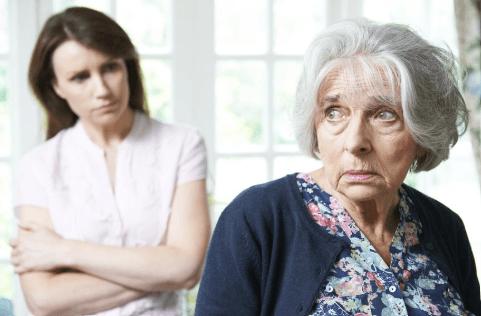
Some folks mistake older women as being weak and unable. They can treat us like we’re frail creatures who can’t do for ourselves. Plus, we deal with patronising terms like “Young lady” and questions like, “Can you use a computer, dear?”
For me, being offended is a choice so let them say what they want, I’ll shrug off any attempt to patronise me. But we older gals don’t like being spoken to as if we were toddlers, and when the spirit moves us, we’ll snap back with a witty, harsh response and a big sarcastic smile.
It’s a good and bad thing
But feeling invisible isn’t just about how society treats older women because some of us have learned that not being seen is a good thing. When our surroundings are confusing or unsettled, it’s safer to stay in the background and not use our voices when we perceive conflict or danger.
A revealing article by Dolores Mosquera for the European Society for Trauma & Dissociation called “The Effects of Feeling Invisible”3 (March 2018), the author points out that invisibility can be protection for some but can have shattering results for others. The article suggests 4 different ways that we can feel invisible.
- When - you are not seen, “nothingness”
It can feel like no one notices or cares about you. Many times, this can be traced back to childhood when caregivers were too busy or were unable to nurture a child in the way it needs. This type of invisibility can lead to being taken advantage of by the likes of romance scammers and manipulators.
- When - what is done to you is not seen by others
In the article, this type of invisibility is referred to as “partial blindness”. This usually occurs when a child is taken care of in one way, but things that may be happening to them are ignored by others. A prime example of this is child sexual abuse at home - one parent is the abuser, and the other doesn’t know or refuses to see.
- When – you try not to be seen because it’s dangerous
Sometimes we feel it’s better to hide than be visible. Again, this can start during childhood but if we sense that something bad could happen, we might stay in the background and not speak out despite our desire to say what’s on our mind. Being unseen can keep you safe.
- When – you try not to be seen because everyone is overwhelmed
If we sense those around us are overwhelmed with responsibility or worry, we tend to hold ourselves back so we’re not adding to their burden. This can lead to a sense of “not getting in the way” which can undermine our own wellbeing. We learn not to ask for what we want or need.
Stepping out from the shadows
It’s clear how feeling unseen can affect our overall wellbeing, so what can we do about it? Here are some ideas on how to improve our visibility and start being seen again. They might not work for everybody, but finding an outlet to plug into usually reaps some great benefits.
- Be courageous
Tomorrow literally never comes, so think about how you can boost your bravery today and kick fear’s ass. If you want to do or say something, ask yourself why you’re holding back and then give yourself a pep talk. Could it really be as bad as you imagine?
- Accept that you’re not everybody’s cup of tea
We’re all different and not everybody is going to like you. That’s perfectly ok because there’s probably people you don’t like. As long as we’re nice to each other, not getting along is acceptable with a small smile and just a wee bit of tolerance. If you’re a “too much” woman like me, be yourself and let them adjust. Their opinion is not your problem.
- Stop apologising for being yourself
Women apologise for their weight, for how they’re dressed, if their hair is messed up. We say sorry for crying, for overcooking dinner, for being in a bad mood. Just stop. If you owe someone apology for a misstep, then you should say you’re sorry, but you don’t need to apologise for just being yourself.
- Get involved
The best way to be seen is to put yourself out there. This could be volunteering for a local charity, joining an online club, making time to visit senior care facilities to say “Hi, how are you today?” Comment on those social media posts, offer your opinion on a topic that matters to you. Show up for yourself.
There are women like me who are loud and feisty, and there are women who are quiet and fierce like my sister. She is an introverted person, and I admire how she stands in the shadows and observes. She doesn’t say much, unless there’s juicy gossip. Her voice is in her church and in her community work. That’s how she makes herself visible. My voice comes out of my fingertips on a small iMac keyboard.
There is no right or wrong way to be seen. The shy Crone who writes a powerful letter to the media is just as powerful as one with a megaphone and a flower in her hair.
We have enormous, untapped value and our voices matter. So let’s pound on the desk and make some friggin’ noise!!!
We are here!
We will be seen!
We need representation!
And we are not going away!
1 Westwood, S. (2023). “It’s the not being seen that is most tiresome”: Older women, invisibility and social (in)justice. Journal of Women & Aging, 35(6), 557–572. https://doi.org/10.1080/08952841.2023.2197658
2 https://www.bodyandsoul.com.au/houseofwellness/do-you-have-invisible-woman-syndrome/news-story/71bdc0c7199a54f24a9ddafb6de1d8b8
3 https://intra-tp.com/wp-content/uploads/2023/10/The-effects-of-being-invisible.pdf
Copyright ©️ 2025 The Crone Network All rights reserved.